In this week’s special presentation of The Right Idea, Derek takes part in a panel discussion recapping Texas’ 88th Legislature Session with TPPF’s Greg Sindelar, Sherry Sylvester and Andrew Brown.

Sherry Sylvester is a Distinguished Senior Fellow at the Texas Public Policy Foundation. She is a political communications and public policy expert who has directed multi-million dollar statewide campaigns in New York, New Jersey and Texas and has been involved in dozens of Texas political campaigns. Campaigns and Elections Magazine has called her a “respected veteran” of hard-fought elections and in 2005, her alma mater, the Graduate School of Political Management, now at George Washington University in Washington D.C., named her “alumni of the year,” for her accomplishments in the field of professional politics. Early in her career Sherry worked as the Communications Director for U.S. Senate candidate Geraldine Ferraro, the first woman ever nominated for Vice President on a major party ticket. She also worked for David Dinkins, the first African-American to be elected Mayor of New York City. In Texas, she served for over a decade as the spokesperson and a strategic advisor to Texans for Lawsuit Reform, the most successful tort reform organization in the nation. She was a member of the original campaign and transition teams of Texas Lt. Governor Dan Patrick and she managed his 2018 re-election campaign. She served for seven years as Senior Advisor to the Lt. Governor. She is currently a Distinguished Senior Fellow at the Texas Public Policy Foundation.
In this week’s special presentation of The Right Idea, Derek takes part in a panel discussion recapping Texas’ 88th Legislature Session with TPPF’s Greg Sindelar, Sherry Sylvester and Andrew Brown.

Wednesday, May 31st 12:00 PM CT
The 88th Legislative Session featured a number of conservative policies and debates affecting the future of Texas, from parental empowerment to property tax reform and many others. What did legislators accomplish, what work is left to be done in a possible special session, and how will the Texas Public Policy Foundation help implement this new legislation?
Join the Texas Public Policy Foundation for a panel discussion on everything that happened during the 88th legislative session, the future of Texas, and what this new legislation means for taxpayers in 2023 and beyond.
Speakers

Today, the Texas Public Policy Foundation applauded the passage of Senate Bill 17, ending taxpayer support for diversity, equity, and inclusion programs. TPPF Distinguished Senior Fellow Sherry Sylvester released the following statement:
“Senate Bill 17, authored by Senator Brandon Creighton, R-Conroe and Rep. John Kuempel, R-Seguin, is the strongest anti-DEI Bill in the nation. SB 17 will end Texas taxpayer support of DEI, a political ideology rooted in the premise that white supremacy is the primary force driving every aspect of university and American life.
“SB 17 will close down DEI offices at Texas colleges and universities, end mandatory DEI training and ensure that no job applicant at a state institution of higher education is required to sign a statement affirming their support of any political doctrine in order to be hired. SB 17 will end the fissures of division that have been created on Texas college and university campuses and help return the principles of open inquiry and free speech to the state’s institutions of higher learning.”

The Texas Tribune began its coverage of the 88th Session this year with a news report screaming that “LGBTQ Texans Ready for Legislative Session as GOP lawmakers target them in dozens of bills.”
The Tribune warns that many LGBTQ people say they are leaving Texas because of the GOP “assault” on their rights.
If LGBTQ people are leaving Texas, they are the only ones. Every data source from the Census Bureau to U-Haul repeatedly shows that Texas is the state most people around the country are moving to, not from.
Newsweek reports that Texas has the second highest LGBTQ population in America, although other sources have radically different numbers. But no source shows an exodus of gay people from the state.
There’s also not much evidence of LGBTQ targeting in bills filed so far in the legislature session—at least no L, G and B. Several legislators have written bills that would prohibit the parents of children suffering from gender dysphoria from allowing their children to have irreversible surgeries including castrations and mastectomies or giving them puberty blockers or cross-sex hormones. Those children might grow up to be “T” people, although the data indicates the most of them won’t.
The division between the LG&B and the so-called “trans” agenda (T) has long been debated in the gay rights movement—and is starting to gain traction. Many believe that the two groups have conflicting missions. Gay people want to be accepted for the men and women that they are. Trans advocates don’t believe that sex is binary and are demanding acknowledgement for being someone other than who they are.
This poses a huge problem for a group like Equality Texas, the source of the alarm in the Texas Tribune’s “LGBTQ attack” story. Equality Texas says it is the largest advocacy group for LGBTQ in Texas and it must rally its troops, but if you look at its bill tracker, their agenda is all about the “T.”
Looking at the bills they are fighting, here’s what we must assume that they support:
Equality Texas describes commonsense policies on these issues as a “threat” to the LGBTQ community.
The use of the term “lifesaving” to describe sex change operations and puberty blockers is deceptive. Researchers have known for some time that gender dysphoria does not put teens at greater risk of suicide than teens suffering from many other mental health risk factors including depression and anorexia. We also know that cross-sex hormones and puberty blockers don’t save lives but actually adversely affects mental health, which can increase suicide risk. So does sex change therapy, which has been repeatedly shown to not be as effective as psychotherapy in treating gender dysphoria in children and adolescents.
The bottom line is that the Equality Texas’ bill tracker makes it clear that it opposes all efforts to affirm the right of parents to raise their children. Several Texas legislators have put forward a constitutional amendment to “enshrine the right to direct the upbringing of their child, including the right to direct the care, custody, control, education, moral and religious training and the medical care of the child.”
Equality Texas opposes the constitutional amendment proposal as another “threat” to the LGBTQ community. Their bill tracker also shows their opposition to legislation that:
Their opposition to school materials and library books is telling. Anyone who doubts whether parents should be monitoring them more closely in our public schools should take a look at the bestselling “Gender Queer,” which has been found in dozens of Texas school libraries. It’s clearly inappropriate for kids.
As for men playing women’s sports, broad majorities of Texans and Americans continue to oppose it. Women sports advocates won that battle in Texas in the last legislative session for high schools and legislation to protect women’s sports in colleges and universities has been proposed this session.
Finally, defining “drag shows” as “sexually oriented” businesses would hopefully make it clear that they do not belong in public schools or public libraries, regardless of what a couple of City Council members in Dallas think.
Large majorities of Americans believe that parents should be able to direct their children’s lives—particularly when it comes to sensitive topics like sexuality—without being overridden by public schools. Equality Texas disagrees and it is trying to convince Texans that to think otherwise is somehow a “threat” to the LGBTQ community.
Some Texans have religious convictions regarding gay people, which was reflected in the recent Republican State Convention platform plank, but in this heavily libertarian state most Texans are “live and let live.” The majority support gay marriage. But no thinking Texan supports allowing a child to determine whether they get a sex change operation or take puberty blockers, whether pornography and drag shows should be allowed in public schools and whether men and boys should be allowed to play in women and girls sports.
To overcome that broad consensus of common sense, Equality Texas and other LGBTQ advocates must convince the LG&B community that they are under attack even though they are not. That’s why we can expect more screaming headlines this session.

The Texas Senate just passed Senate Bill 17, which will require Texas colleges and universities to close their offices dedicated to “Diversity, Equity and Inclusion,” (DEI).
Senate Bill 17 will also prohibit universities from requiring applicants for teaching and administrative jobs to provide a so-called “diversity statement” that is free of any offensive words like, “merit” and “color-blind.” It also prohibits mandatory DEI training.
Senator Brandon Creighton’s, R-Conroe, leadership on this legislation – a priority for Lt. Governor Dan Patrick – was remarkable in many ways, not the least of which is that DEI offices at Texas colleges and universities, like DEI offices nationally, rarely provide any information on what they actually do.
The truth is buried deep in the website of the National Association of Diversity Officers in Higher Education. They describe their mission as “engaging in ongoing ways to incorporate alternative narratives in the curriculum and provide robust learning opportunities on the history of racism, colonization, and conquest on how higher education and other sectors of society have been complicit in maintaining systems of privilege.”
DEI officers are working to ensure that every administrator, every faculty member and every student believes these “alternative narratives” which include the notion that America was really founded in 1619 when the first African Americans arrived in Virginia, and that the American Revolution and the Texas Revolution were fought to maintain slavery. The Pilgrims didn’t colonize America for religious liberty, they came here to conquer the native tribes, just like Columbus did two hundred years before. There’s no end to these “alternative narratives,” some of which are linked to a part of our history and some of which are pure fabrications.
Underlying these “alternative narratives” is the bedrock belief of DEI that racism is not an individual act of evil, it is a structural system, geared toward preserving white supremacy.
Higher education is part of this systemic racism, according to DEI’s assessment. So is free-market capitalism, America’s legal system rooted in English common law, medicine, virtually everything American, including our values of achievement, hard-work, equality and independence.
According to DEI, the system is rigged and DEI officers say to “mitigate racism,” they must dismantle all those systems and overthrow those values.
That’s why an applicant for a biology professor job at Texas Tech was disqualified when he said he treated all his students equally. Equality is not a DEI value. Equality under the law, the principle that undergirds all our civil rights legislation, has been replaced in DEI by equity, which is about redistributing resources. That’s why many conservatives draw a direct line from DEI to Marxism.
The bottom line is that DEI advocates believe all white Americans are racist, whether they know it or not. Many non-white Americans can be unconsciously racist too, if they buy into “white values” like hard work, self-reliance and even being on time. Following a schedule, according to DEI advocates, is a white thing.
Viewing the world through that DEI prism creates a new standard of inequality. Students are either privileged perpetrators of white supremacy or victims of it. That’s what DEI teaches.
Texas has a dark history of racism – slavery, brutal reconstruction, the violence of the Jim Crow era and segregation. Every Texas public school student is taught that history so that we will never forget those awful times.
But Texas also has a history of breaking down barriers, especially when it comes to our public schools and universities. The Texas Public Policy Foundation conducted focus groups across the state last year and we found that African Americans and Hispanics do not think of themselves as victims; they think of themselves as Texans. They identify with Texas values of independence and freedom. Those who arrive at Texas universities are proud Texans – perhaps until they are hit with DEI ideology everywhere they turn, insisting that somehow the system is rigged and there’s no way they can win.
That’s why few were surprised by the Texas A&M survey that showed that in 2015, 82% of African Americans felt they belonged at the university. By 2019, after four years of DEI programs, only 55% felt they belonged.
A Baylor University study conducted in 2018 found that having a DEI program at a university had no impact on increasing minority faculty hiring. There’s no evidence that DEI helps increase successful college outcomes for minority and women students, either. And we have almost daily examples of how DEI stifles free speech, with a Stanford Law School dean’s shouting down of a federal judge being the most recent example.
Texas is not the only place where DEI is being scrutinized, and not just by conservatives. Earlier this month, the Massachusetts Institute of Technology (MIT) at Cambridge held a debate entitled “Should DEI be Abolished?” Even those who were defending DEI said it had “gone off the rails.”
Texas college and university budgets and websites reveal that hundreds of DEI officers are employed at Texas institutions of higher learning and Texas taxpayers are spending millions to keep those offices open. The Texas Senate was absolutely right to vote to shut them down. The Texas House and other states should follow their lead.
Sherry Sylvester is a Distinguished Senior Fellow at the Texas Public Policy Foundation, and the former Senior Advisor to Texas Lt. Governor Dan Patrick.
To sign up for 9th & Congress emails, click here.

When Walter Wendler, president of West Texas A&M University, blocked a drag show performance on his campus, likening it to blackface, he was excoriated by the organized LBGTQ+ community, which launched a petition calling it a “gross and abhorrent comparison of two completely different topics. It claimed Wendler was using an “incorrect definition of drag as a culture and form of performance art.”
But Wendler is right. Drag shows are essentially the same as blackface. It’s not even a close call. Here’s how the Smithsonian’s National Museum of African American History and Culture describes blackface:
“Minstrelsy, comedic performances of “blackness” by whites in exaggerated costumes and make-up, cannot be separated fully from the racial derision and stereotyping at its core. By distorting the features and culture of African Americans—including their looks, language, dance, deportment, and character—white Americans were able to codify whiteness across class and geopolitical lines as its antithesis.”
Change blackness to womanhood and you have a precise definition of drag—”comedic performances of women by men in exaggerated costumes and make-up…” The only difference is that most thinking people have long recognized that blackface is the essence of racism and hate. As the Smithsonian notes, it “cannot be separated from racial derision and stereotyping at its core.” Similarly, drag shows are all about misogyny and utter contempt for women.
It is inexplicable that there is so little outrage about the obvious and vicious sexism that emanates from drag queens and drag performances, but as the Dallas Morning News reports, drag shows have become part of the mainstream, popular culture.
Ignoring the hateful and belittling stereotypes of women presented by drag queens—catty, bitchy, dumb and obsessed with sex—Nancy Pelosi, the first woman ever to serve as Speaker of the U.S. House, appeared as a guest on “RuPaul’s Drag Race All-Stars” where she praised the men for the “joy and beauty you bring into the world.”
Both blackface and drag trace their roots to Shakespeare. Women were forbidden to act in Elizabethan times, but many believe Shakespeare’s hand-written stage directions, “DRAG,” indicated “dressed as a girl.” But nothing in Shakespeare’s works indicates a disdain for women. Juliet, Lady Macbeth, Beatrice, Viola and Cordelia weren’t stereotypes, even though they were played by men. And Shakespeare’s masterful Othello, played by white actors in blackface until modern times, reveals that he understood the evil and pain of racism.
Even using the standards of “presentism” that is so popular among the left, it is hard to see how Shakespeare’s endorsement would count much for blackface or drag. He lived in a time when slavery was not particularly controversial, and witches were still being burned.
Blackface migrated to America and took hold in the 1830s. Jim Crow was a blackface character. According to the Smithsonian, minstrel shows including troupes of white actors performing as black people became popular after the Civil War and continued until relatively recently. They note that “The Black and White Minstrel Show” was a popular British television show until the late 1970s. It ended after the Civil Rights movement in the United States heightened awareness about racism.
If, as the students at WTAMU insist, banning drag shows is an offense to gay and lesbian people, perhaps there is a parallel in the fact that the so-called “King of Blackface,” Al Jolson, was lauded for his musical talent throughout his career. Knowing the racism and damage that was done, it is unimaginable today, but some African Americans believed Jolson brought black music to the theatre at a time when blacks were not allowed to appear on stage.
One of the ugliest things about blackface is that it perpetuated the most violent racism in America by pushing racial stereotypes that black men were stupid with enormous sexual appetites. Alleging rape was one of the most common motivations for lynching, and blackface played a huge role in pushing that myth.
Drag pushes similar sexual stereotypes about women including overdone facial makeup—massive brows, lips and lashes, exaggerated breasts and wildly gyrating sexual movements that suggest voracious sexual appetites.
That’s one reason Dr. Wendler is right when he says there’s no such thing as a harmless drag show and why Texas State Sen. Bryan Hughes, R-Tyler, should be lauded for Senate Bill 12 and Senate Bill 1608, which restrict drag shows to adult audiences and keep them out of public libraries.
Hopefully the “RuPaul Drag Race All Stars” will go the way of the “Black and White Minstrel Show” as the public finally realizes drag shows have nothing to do with gay rights. They are all about hate—and a particularly vicious kind of sexism.
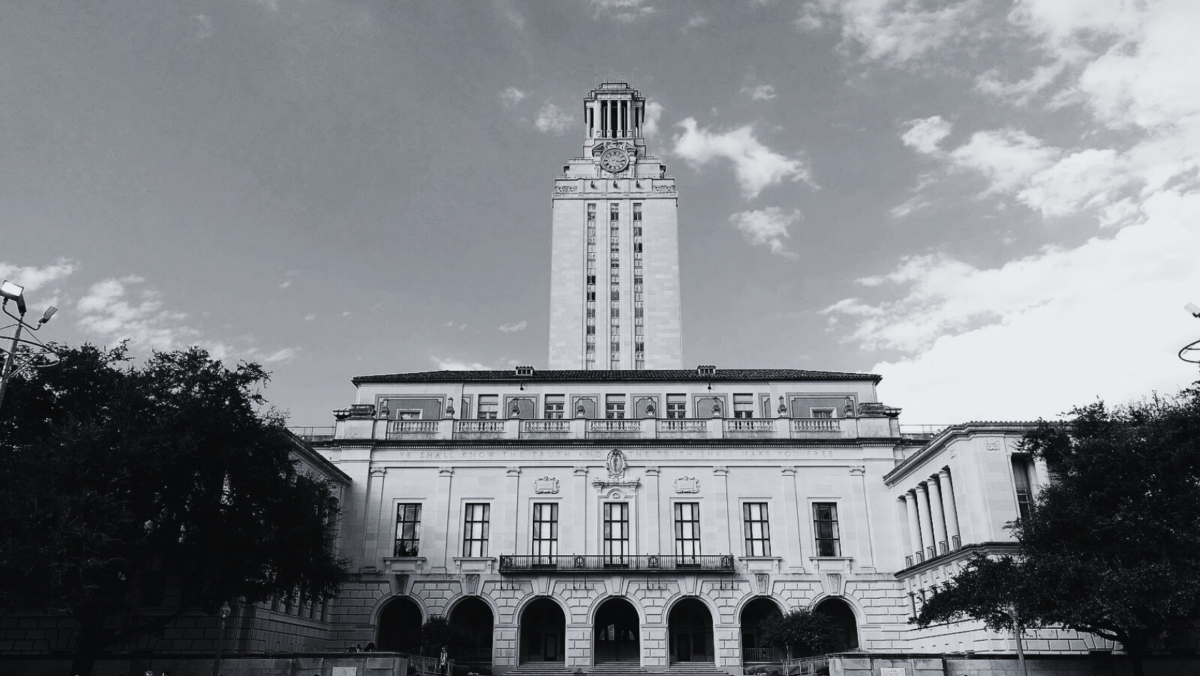
The University of Texas Board of Regents just made a very good decision to “pause any new DEI policies on our campuses.” Texas Tech, the University of Houston and Texas A&M also say they are working to end DEI on their campuses. In making the announcement, University of Texas Board of Regents Chairman Kevin Eltife also said he has asked for a report on current DEI policies across all campuses.
DEI, the acronym for the so-called diversity, equity and inclusion policies, has become a driving force on many Texas campuses, including UT, through a vast administrative network that controls hiring and promotions. It also employs aggressive strategies that infuse DEI into curriculum.
DEI’s advocates relentlessly insist that their goal is minority recruitment or fair treatment, but that is just the cover story. As the National Association Scholars noted in a report on UT earlier this year, “a large bureaucracy devoted to advancing the vague goals of DEI” is evident throughout the university.
Eltife clearly states the difference, noting that UT welcomes “welcomes, celebrates and strives for diversity on our campuses in our student and faculty population…”
But he notes DEI has become something else:
“I also think it’s fair to say that in recent times, certain DEI efforts have strayed from the original intent to now imposing requirements and actions that, rightfully so, has raised the concerns of our policymakers about those efforts on campuses across our entire state.”
To understand the difference between ensuring that Texas college campuses are comprised of students and staff that reflect the broad diversity of our state and the pernicious goals DEI, it is important to examine exactly what the DEI ideology is and how it operates in the academic space.
DEI is rooted in critical race theory (CRT) and the new gender ideologies. Over the last couple decades, DEI has morphed both theories beyond being just left-wing ideas into structured operating systems.
The template for the fall schedule at UT’s McCombs School of Business demonstrates the result. It includes a content warning section that some of the business courses may be offensive or result in curriculum induced trauma. It is not clear exactly what kind of “trauma” could result from Econ 101, but thanks to DEI, UT is standing by and prepared.
The McCombs Business School template also includes a ridiculous “land acknowledgement” to be read before every class and event. It goes like this:
“We acknowledge that we are meeting on the Idigenous [sic] lands of Turtle Island, the ancestral name for what is now North America.” They must also affirm: “I would like to acknowledge that Alabama-Coushatta, Caddo, Carrizo/Comecrudo, Coahuiltecan, Comanche, Kickapoo, Lipan Apache, Tonkawa, Ysleta Del Sur Pueblo and all the American and Indigenous Peoples who have been or have become a part of these lands and territories of Texas.”
Besides being a guilt inducing virtue signal, suggesting that we are somehow on stolen land, this statement is, like the 1619 Project, simply bad history. .Among other things, this fails to note the fact that the Spanish were actually in Texas before several of these tribes so perhaps Carlos III de Bourbon, His Most Catholic Majesty should also be on this list.
Most professors don’t complain about these things because they are required to provide a “diversity statement” before they can even be considered for a job at UT. The statement must include proof of adherence to the ideology of DEI. Candidates are excluded if they use words like merit, color-blind or even equality.
Texas Gov. Greg Abbott pointed out recently that this is against the law. His office reminded universities and state agencies that hiring cannot be based on factors other than merit. Civil rights laws protect everyone from being discriminated against because of their race, ethnicity or, in the case of DEI, because of what they believe.
Eltife and the Board of Regents should carefully read the DEI reports he gets back from faculty and staff at UT. They must separate genuine efforts to increase minority recruitment from the ideological agenda of maintaining the DEI infrastructure in campus climate and curriculum. They should also ask other groups to send them reports—traditional faculty and students who want an atmosphere of open inquiry and learning who are often shut out by UT’s DEI regime.
The regents also need to hear what they have to say.

Texas Gov. Greg Abbott’s office just sent out a memo to Texas colleges, universities and state agencies reminding them that they must follow civil rights laws and ensure that all hiring decisions are based solely on merit.
Abbott’s Chief of Staff, Gardner Pate, explains in the memo that “…the innocuous sounding notion of Diversity, Equity and Inclusion (DEI) has been manipulated to push policies that expressly favor some demographic groups to the detriment of others.”
Last month, the National Association of Scholars released an extensive report on DEI at the University of Texas revealing how employment of faculty and staff there is now linked to left-wing political goals. Shortly after that, a freedom of information report obtained by Do No Harm revealed that Texas A&M Medical School had, among other things, removed photographs of white male graduates to further its DEI goals. And this week the Wall Street Journal published an op-ed detailing the way DEI is used at Texas Tech to screen out job applicants who do not accept DEI dogma.
Immediately, the Texas media launched a disinformation campaign.
The Texas Tribune screamed: Governor Greg Abbott tells state agencies to stop considering diversity in hiring
Most of the state’s electronic media regurgitated the Texas Tribune report as if it were fact, reporting that DEI is about eliminating discrimination and ensuring fair treatment.
The Houston Chronicle and San Antonio Express news reported that Abbott was going after diversity hiring programs while the Dallas Morning News digital headline proclaimed: Abbott declares it illegal to consider diversity in employment. Their editorial board fired off an odd piece the next day—Governor Abbott’s Big DEI Mistake insisting that, although Abbott is right about ideological litmus tests, what is going on at Texas institutions of higher education is surely “well-intentioned” because hiring diverse employees is a good thing.
They are wrong. DEI is not “well-intentioned,” and it is not about diversity hiring or fair treatment. DEI is about dictating how people think. The job candidate evaluations at Texas Tech revealed that applicants were downgraded for using the wrong pronoun or saying they respected and treated all students the same—which is not allowed. Another applicant was chastised for not knowing the difference between equity and equality.
Clearly, the Texas media is also confused about the difference between equality and Equity. Equality is the belief that everyone must have access to life, liberty, education, jobs and the tools to reach for the American dream. The civil rights laws of the 1960s referred to in the memo from Gov. Abbott’s office are built on the principle of equality. Title IX laws, which give women equal access to higher education, are also about equality.
Equity calls for equal outcomes—we must all end up at the same place. According to the principles of DEI, the fact that I played basketball in high school but never really had a shot at the NBA means there’s equality in sports, but not equity. DEI disdains equality. It is all about equity.
Diversity is a word that DEI also distorts. Diversity has always been used to define a community whose members have a broad range of backgrounds, like Texas, where 29 million people speak 160 languages, English, Spanish, Vietnamese, Chinese and Tagalog being the most common. Our state was founded and continues to be built by a very diverse population of Hispanics, Anglos, African Americans, Native Americans, Germans, Central Americans and others who flock daily to our state. Texas reflects all those voices.
But diversity, as it is taught in Texas colleges and universities, means dividing everyone into groups of either oppressors or victims as defined by critical race theory. Oppressors are people who have benefited from the racism and white supremacy that DEI proponents believe is the foundation for America. Victims are those who are suffering from the white supremacy that in their view, still drives every aspect of our cultural, political and economic lives.
In addition to critical race theory, DEI advocates also espouse “gender theory,” insisting that gender is not binary and the fact that children are “assigned a gender at birth” is an arbitrary action perpetuated by the white patriarchy. Every child, they insist, should be allowed to choose their own gender.
Wrap this all up with disinformation about “inclusion” and you can see why Governor Abbott’s memo was necessary. Texas colleges and universities are giving preferential hiring treatment (inclusion) to those who believe our country is driven by racism, white supremacy and a binary gender patriarchy. Everyone else, especially those who espouse principles like merit, initiative, color-blindness and equality fall into the “white supremacist” category. They are excluded.
DEI also suppresses dissent and free speech, something the media usually cares about, but in this case, clearly not. Fifty-seven percent of Texas college students report that they censor themselves when talking to other students, professors or administrators because they are fearful of reprisal. Ironically, at the same time, over 70% of Texas college students oppose allowing a critic of Black Lives Matter to speak on their campus because DEI teaches intolerance of views that don’t comply with the dogma.
This week Senate Finance Committee Chair, Joan Huffman, R-Houston warned university officials that DEI will not be tolerated at Texas colleges and universities. She warned the taxpayer-funded institutions that the state’s budget appropriators are watching.
Texans oppose both DEI and CRT and will support Gov. Abbott and the Texas Legislature continuing to move forward to get rid of it in Texas. They have learned to ignore the disinformation coming from the Texas media.
The Texas Tribune began its coverage of the 88th Session this year with a news report screaming that “LGBTQ Texans Ready for Legislative Session as GOP lawmakers target them in dozens of bills.”
The Tribune warns that many LGBTQ people say they are leaving Texas because of the GOP “assault” on their rights.
If LGBTQ people are leaving Texas, they are the only ones. Every data source from the Census Bureau to U-Haul repeatedly shows that Texas is the state most people around the country are moving to, not from.
Newsweek reports that Texas has the second highest LGBTQ population in America, although other sources have radically different numbers. But no source shows an exodus of gay people from the state.
There’s also not much evidence of LGBTQ targeting in bills filed so far in the legislature session—at least no L, G and B. Several legislators have written bills that would prohibit the parents of children suffering from gender dysphoria from allowing their children to have irreversible surgeries including castrations and mastectomies or giving them puberty blockers or cross-sex hormones. Those children might grow up to be “T” people, although the data indicates the most of them won’t.
The division between the LG&B and the so-called “trans” agenda (T) has long been debated in the gay rights movement—and is starting to gain traction. Many believe that the two groups have conflicting missions. Gay people want to be accepted for the men and women that they are. Trans advocates don’t believe that sex is binary and are demanding acknowledgement for being someone other than who they are.
This poses a huge problem for a group like Equality Texas, the source of the alarm in the Texas Tribune’s “LGBTQ attack” story. Equality Texas says it is the largest advocacy group for LGBTQ in Texas and it must rally its troops, but if you look at its bill tracker, their agenda is all about the “T.”
Looking at the bills they are fighting, here’s what we must assume that they support:
Equality Texas describes commonsense policies on these issues as a “threat” to the LGBTQ community.
The use of the term “lifesaving” to describe sex change operations and puberty blockers is deceptive. Researchers have known for some time that gender dysphoria does not put teens at greater risk of suicide than teens suffering from many other mental health risk factors including depression and anorexia. We also know that cross-sex hormones and puberty blockers don’t save lives but actually adversely affects mental health, which can increase suicide risk. So does sex change therapy, which has been repeatedly shown to not be as effective as psychotherapy in treating gender dysphoria in children and adolescents.
The bottom line is that the Equality Texas’ bill tracker makes it clear that it opposes all efforts to affirm the right of parents to raise their children. Several Texas legislators have put forward a constitutional amendment to “enshrine the right to direct the upbringing of their child, including the right to direct the care, custody, control, education, moral and religious training and the medical care of the child.”
Equality Texas opposes the constitutional amendment proposal as another “threat” to the LGBTQ community. Their bill tracker also shows their opposition to legislation that:
Their opposition to school materials and library books is telling. Anyone who doubts whether parents should be monitoring them more closely in our public schools should take a look at the bestselling “Gender Queer,” which has been found in dozens of Texas school libraries. It’s clearly inappropriate for kids.
As for men playing women’s sports, broad majorities of Texans and Americans continue to oppose it. Women sports advocates won that battle in Texas in the last legislative session for high schools and legislation to protect women’s sports in colleges and universities has been proposed this session.
Finally, defining “drag shows” as “sexually oriented” businesses would hopefully make it clear that they do not belong in public schools or public libraries, regardless of what a couple of City Council members in Dallas think.
Large majorities of Americans believe that parents should be able to direct their children’s lives—particularly when it comes to sensitive topics like sexuality—without being overridden by public schools. Equality Texas disagrees and it is trying to convince Texans that to think otherwise is somehow a “threat” to the LGBTQ community.
Some Texans have religious convictions regarding gay people, which was reflected in the recent Republican State Convention platform plank, but in this heavily libertarian state most Texans are “live and let live.” The majority support gay marriage. But no thinking Texan supports allowing a child to determine whether they get a sex change operation or take puberty blockers, whether pornography and drag shows should be allowed in public schools and whether men and boys should be allowed to play in women and girls sports.
To overcome that broad consensus of common sense, Equality Texas and other LGBTQ advocates must convince the LG&B community that they are under attack even though they are not. That’s why we can expect more screaming headlines this session.
Today, the Texas Public Policy Foundation congratulates the National Association of Scholars (NAS) on the release of its report, “Comprehensive Restructuring: Diversity Equity and Inclusion (DEI) at the University of Texas.” The report finds that the UT-Austin’s DEI initiatives push a clear ideological agenda rooted in controversial claims about race, gender, oppression, and white privilege.
“In this report, NAS chronicles how UT-Austin gave in to student demands in 2016, when they called for a complete overhaul of the university to address dubious social justice concerns. The university created a massive and bloated bureaucracy of so-called ‘diversity, equity and inclusion’ programs that now permeate every aspect of university life, dividing students based on phony critical race and gender theories,” said Sherry Sylvester, a Distinguished Senior Fellow at TPPF.
The report found UT-Austin routinely trains students and faculty using the writings of Ibram X. Kendi, author of “The Anti-Racist Baby” and other books and Robin DiAngelo, a professor in “whiteness studies” and author of “White Fragility.” The UT-Austin curriculum is riddled with their ideas and critical race theory, which actually discriminates against individuals based on their race.
TPPF is advocating a number of higher education reforms in the current legislative session including examining the ways Texas’ colleges and universities are held accountable to ensure parents and students have reliable and transparent information about college quality. TPPF also supports legislation that will ensure that equality, freedom of speech and open intellectual inquiry are top priorities at all Texas academic institutions going forward.